About kind
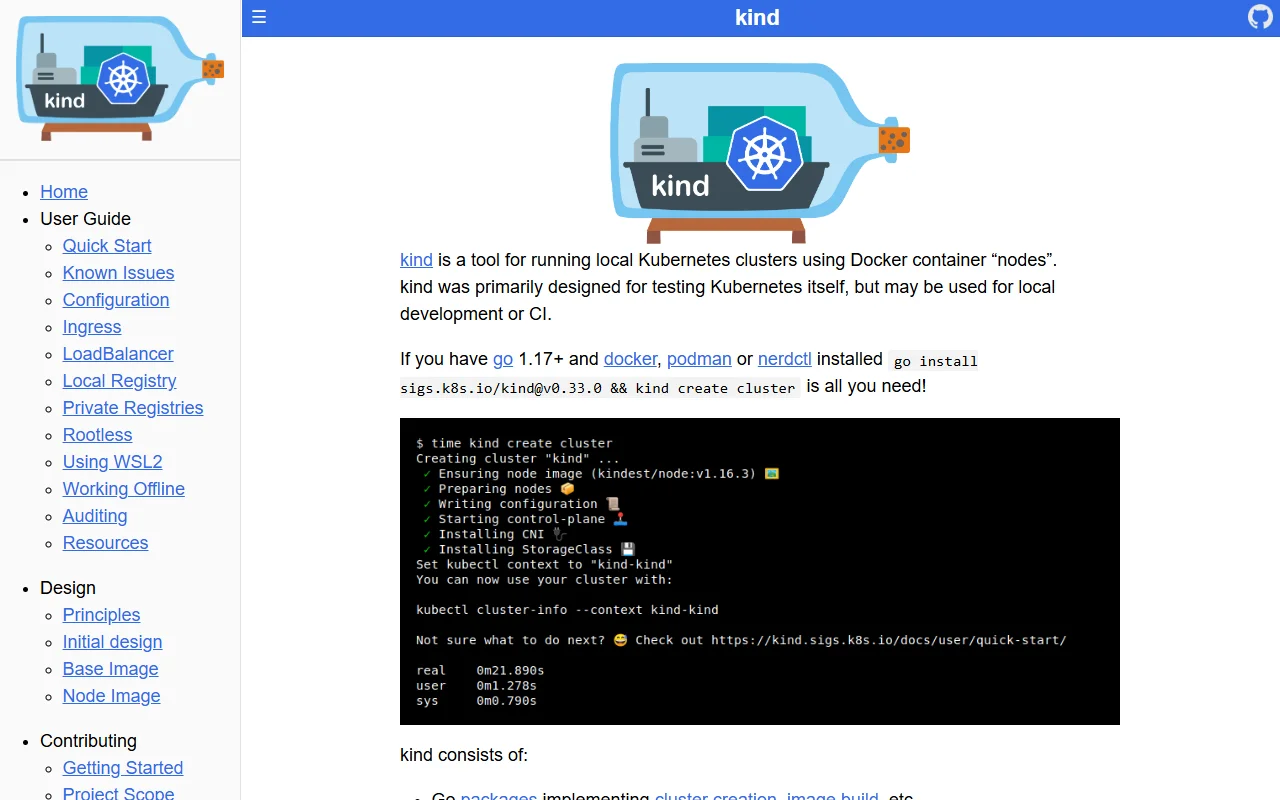
kind is a command line tool that starts Kubernetes clusters on your own computer. Each cluster node runs as a Docker container, which keeps clusters light and easy to remove.
What it does
kind creates a local Kubernetes cluster with one command and deletes it when you no longer need it. Each node is set up with kubeadm, the standard Kubernetes bootstrap tool. The project also ships Go packages that handle cluster creation and node image builds, and the command line tool is built on top of them.
Key features
- Create and delete clusters with simple commands
- Multi-node clusters defined in a config file
- Build node images from Kubernetes source code
- Works with Docker, Podman or nerdctl
Who it's for
kind was built mainly for testing Kubernetes itself. It also suits developers who want a disposable cluster on a laptop and teams that run Kubernetes tests in CI pipelines.
Pricing and good to know
kind is open source under the Apache-2.0 license, so it costs nothing to use. You need Go 1.17 or newer to install it with go install, plus a container runtime such as Docker running on the machine. The project describes itself as a work in progress, so check its roadmap before depending on a specific feature.
Highlights
- Create and delete local clusters with simple commands
- Run multi-node clusters defined in a config file
- Build node images from Kubernetes source code
- Works with Docker, Podman or nerdctl as the container runtime
- Test Kubernetes releases in a disposable environment