About Dev Containers
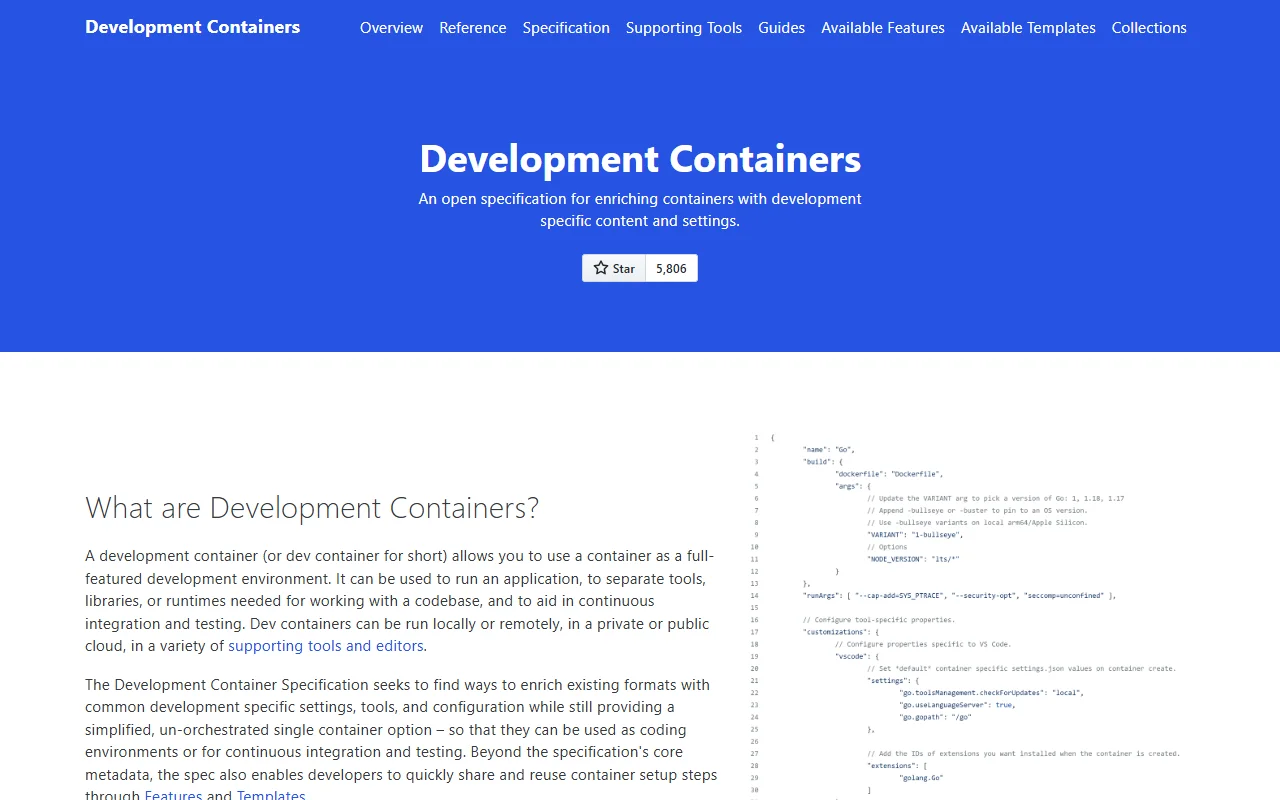
Dev Containers is an open specification for using a container as a full development environment. A project defines its tools, libraries and settings in one file, so every developer gets the same setup.
What it does
A dev container runs your code inside a container that already has the right runtimes and tools installed. The specification adds development settings on top of a standard container definition. The same setup can also be used for continuous integration and testing. Teams can share setup steps as reusable features and ready-made templates.
Key features
- Define tools and runtimes in one config file
- Run a full development environment in a container
- Reusable features that add tools and setup steps
- Templates for common tech stacks
- Works on your machine, on a remote server or in the cloud
Who it's for
Developers and teams who want the same environment for everyone on a project. It also helps teams that run continuous integration and need test environments that match their development setup.
Pricing and good to know
The specification is an open standard, and its reference material is published on GitHub under a Creative Commons licence. Many editors and tools support it. You still need a container runtime on the machine or server that runs the container, and the first build can take some time.
Highlights
- Define tools and runtimes in one config file
- Run a full development environment in a container
- Reusable features that add tools and setup steps
- Templates for common tech stacks
- Works on your machine, on a remote server or in the cloud