About Flask
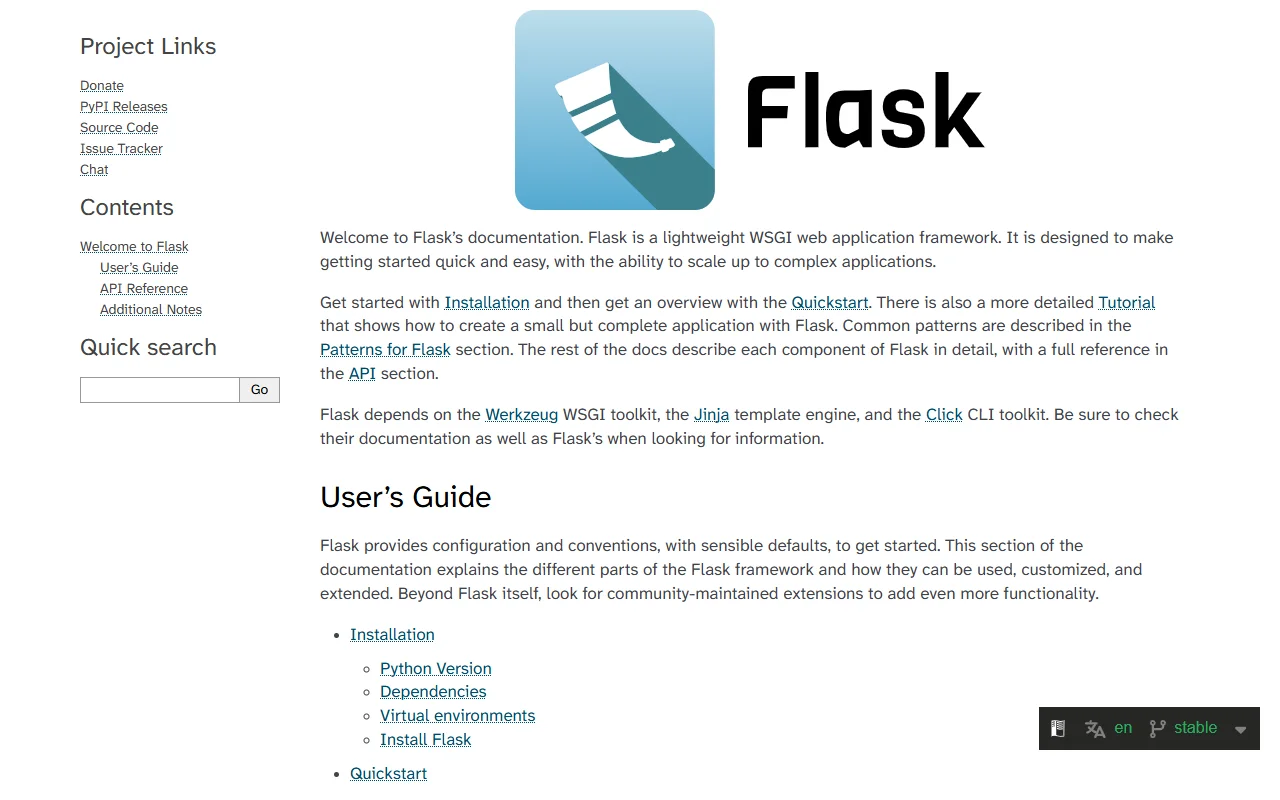
Flask is a lightweight web framework for Python. It is built on the Werkzeug WSGI toolkit and uses the Jinja template engine, and it starts small so you can add only the parts a project needs.
What it does
You write view functions for URLs, render templates, read request data and return responses. Flask includes sessions, flashed messages, logging and a test client for running requests in tests. Blueprints help you split a larger app into parts, and the docs cover patterns for growing a project into a full application.
Key features
- Routing and view functions for URLs
- Jinja templates with autoescaping
- Test client for app requests
- Blueprints to organise larger projects
Who it's for
Python developers who want a simple base for web apps, prototypes and small APIs. It is widely taught and has many community extensions, which makes it a common choice for teams that want to choose their own database and tools.
Pricing and good to know
Flask is open source under the BSD-3-Clause licence and free to use. Because the core is small, you will often add extensions for databases, forms and authentication. Production use needs a separate WSGI server, which the deployment guide covers.
Highlights
- Routes and view functions for URLs
- Jinja templates with autoescaping
- Built-in test client for requests
- Blueprints for larger projects