
About semantic-release
semantic-release is an open source tool that works out the next version of a package and publishes it automatically. It reads commit messages to decide whether a change is a fix, a feature or a breaking change.
What it does
After a merge, semantic-release checks the commits since the last release and picks a new version that follows Semantic Versioning. It then writes release notes and publishes the package to the configured channel. Most of the work runs in a continuous integration pipeline, so maintainers do not need to tag versions by hand.
Key features
- Next version worked out from commit messages
- Release notes generated from commits
- Publishing through plugins
- Distribution channels such as npm dist-tags
- Runs inside a continuous integration pipeline
Who it's for
semantic-release suits open source maintainers and teams that publish packages often and want releases to follow a strict convention. Teams need to agree on a commit message format before the tool is useful.
Pricing and good to know
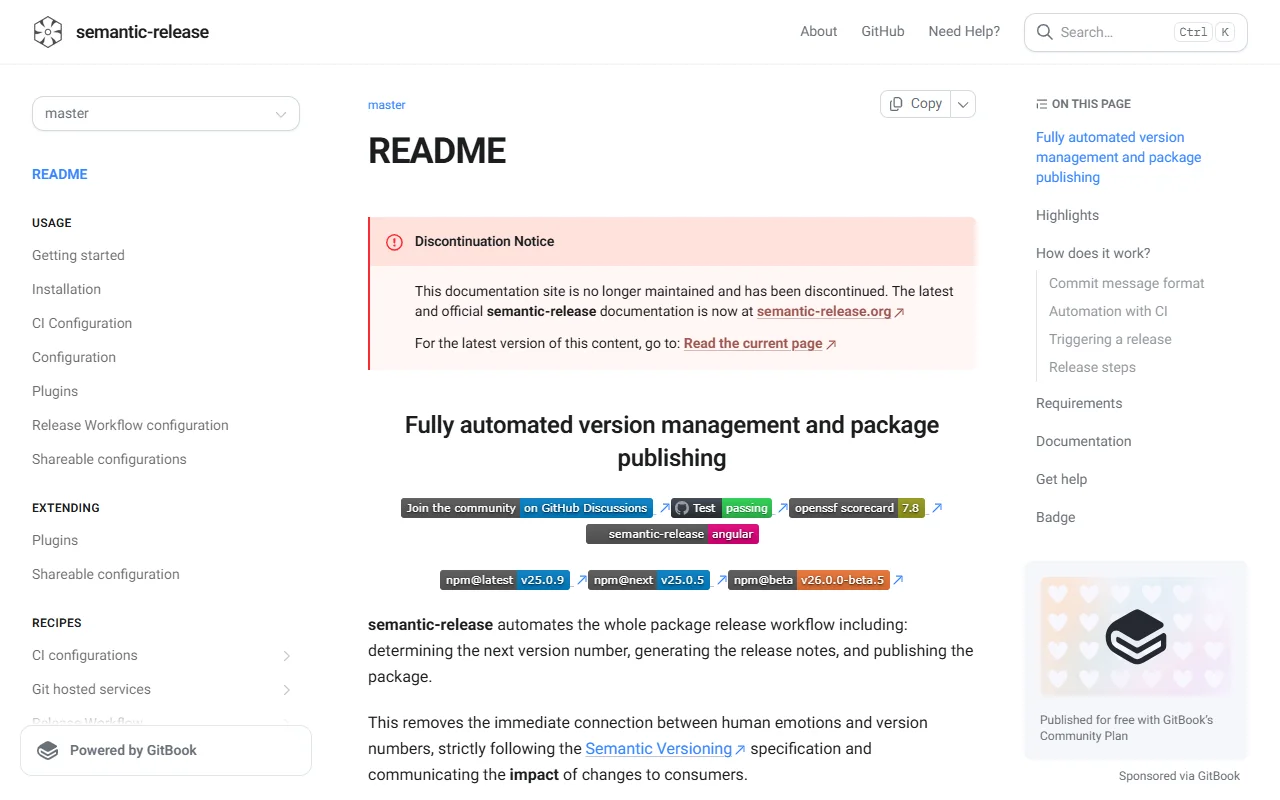
The project is open source under the MIT license. It needs a commit message convention and a CI setup to run. The documentation site on GitBook is no longer maintained, so use the official semantic-release site for current guides.
Highlights
- Picks the next version from commit messages
- Writes release notes from commits
- Publishes to npm dist-tags and other channels
- Runs inside a continuous integration pipeline
- Extends through plugins for other package types