About Sass
Sass is an open source stylesheet language that compiles to plain CSS. It adds features such as variables, nesting and reusable blocks to the CSS you write.
What it does
Sass takes files written in its own syntax and outputs regular CSS that works in any browser. Its features let you define values once, group related selectors, and share styles across files through modules. Because it is compatible with CSS, most existing stylesheets work with little or no change.
Key features
- Variables and reusable mixins
- Nested selectors and partial files
- Modules for sharing styles across files
- Compiles to plain CSS
- Works with build tools and frameworks
Who it's for
Front-end developers and designers who maintain large stylesheets and want less repetition. Many CSS frameworks are written in Sass, so it is common in projects that use them.
Pricing and good to know
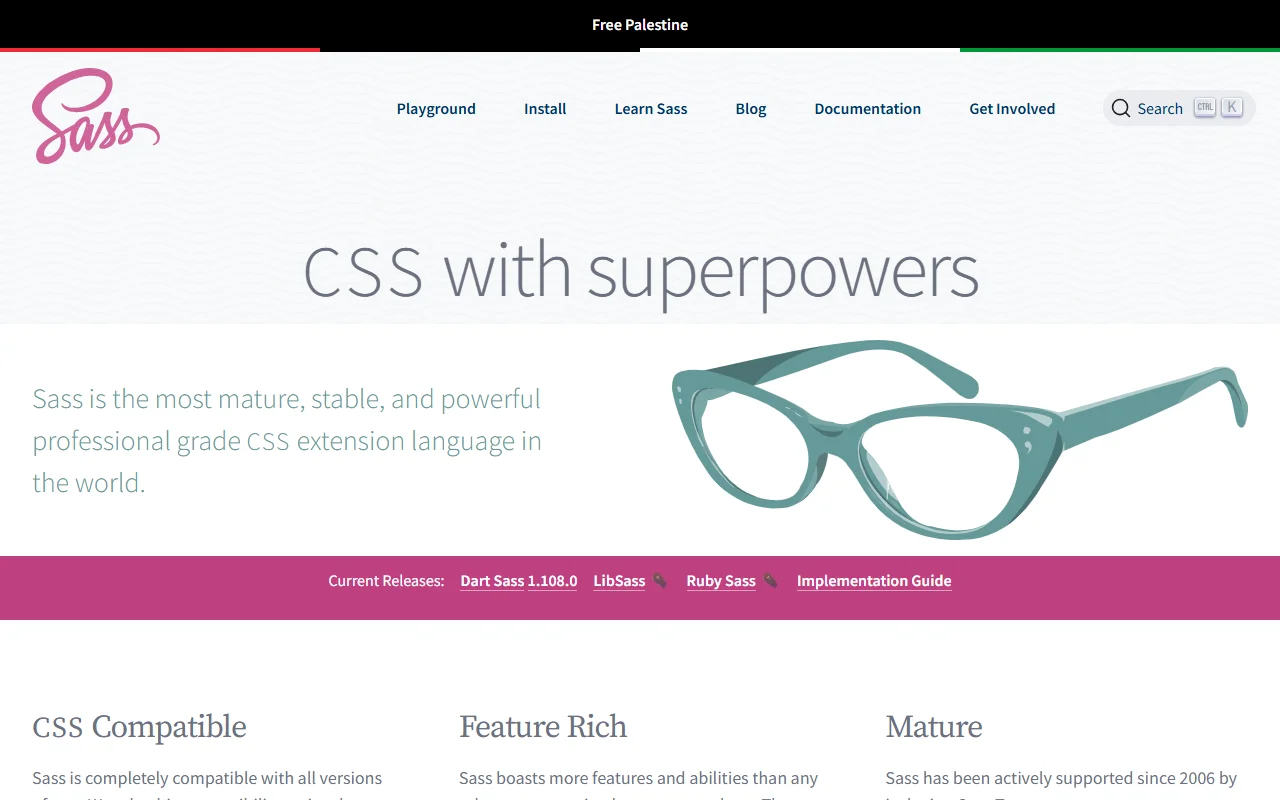
Sass is free and released under the MIT license. The site lists Dart Sass as the current implementation and marks LibSass and Ruby Sass as no longer maintained, so use Dart Sass for new projects. Sass compiles at build time, so the output CSS is what the browser loads.
Highlights
- Variables and mixins for reusable styles
- Nested selectors that mirror your HTML
- Modules for sharing styles across files
- Compiles to standard CSS for any browser
- Works with common build tools and frameworks