
About JUnit
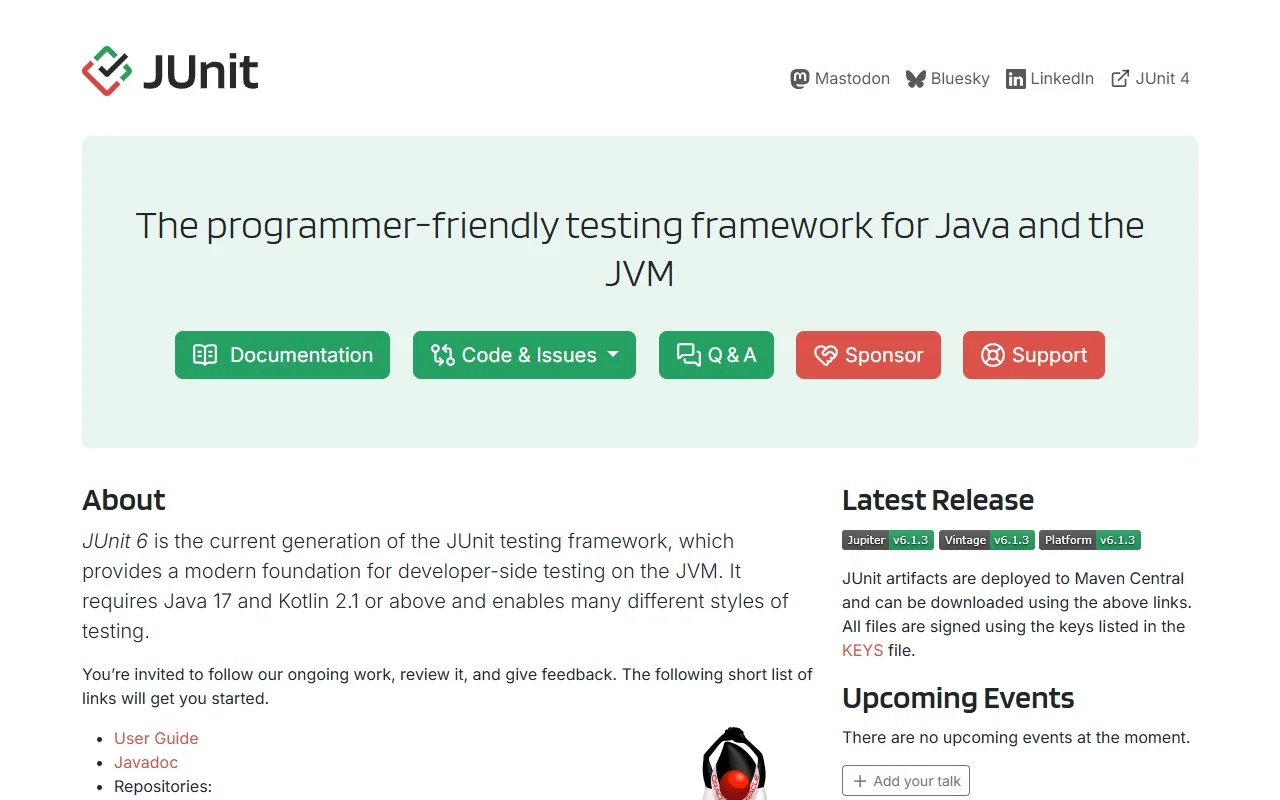
JUnit is a testing framework for Java and other JVM languages. The current generation, JUnit 6, requires Java 17 and Kotlin 2.1 or above.
What it does
JUnit lets you write tests as annotated methods and run them from your build tool or IDE. It reports which tests passed, failed or were skipped. It is one of the best known testing frameworks for Java, and many Java projects rely on it.
Key features
- Annotated test methods with a clear lifecycle
- Assertions for checking expected results
- Extensions that change how tests run
- Artifacts published to Maven Central for easy setup
- Works with JVM languages such as Kotlin
Who it's for
Java and Kotlin developers who want a standard way to write unit and integration tests. Teams that already use JVM build tools will find the setup straightforward.
Pricing and good to know
JUnit is free and open source under the Eclipse Public License 2.0. It runs on the JVM, and JUnit 6 needs Java 17 or later. Core team members offer commercial support in cooperation with a partner company, and the project accepts donations. The source code and issue tracker are on GitHub.
Highlights
- Annotated test methods with a clear lifecycle
- Assertions for checking expected results
- Extensions that change how tests run
- Published to Maven Central for easy setup
- Works with JVM languages such as Kotlin