
About Jekyll
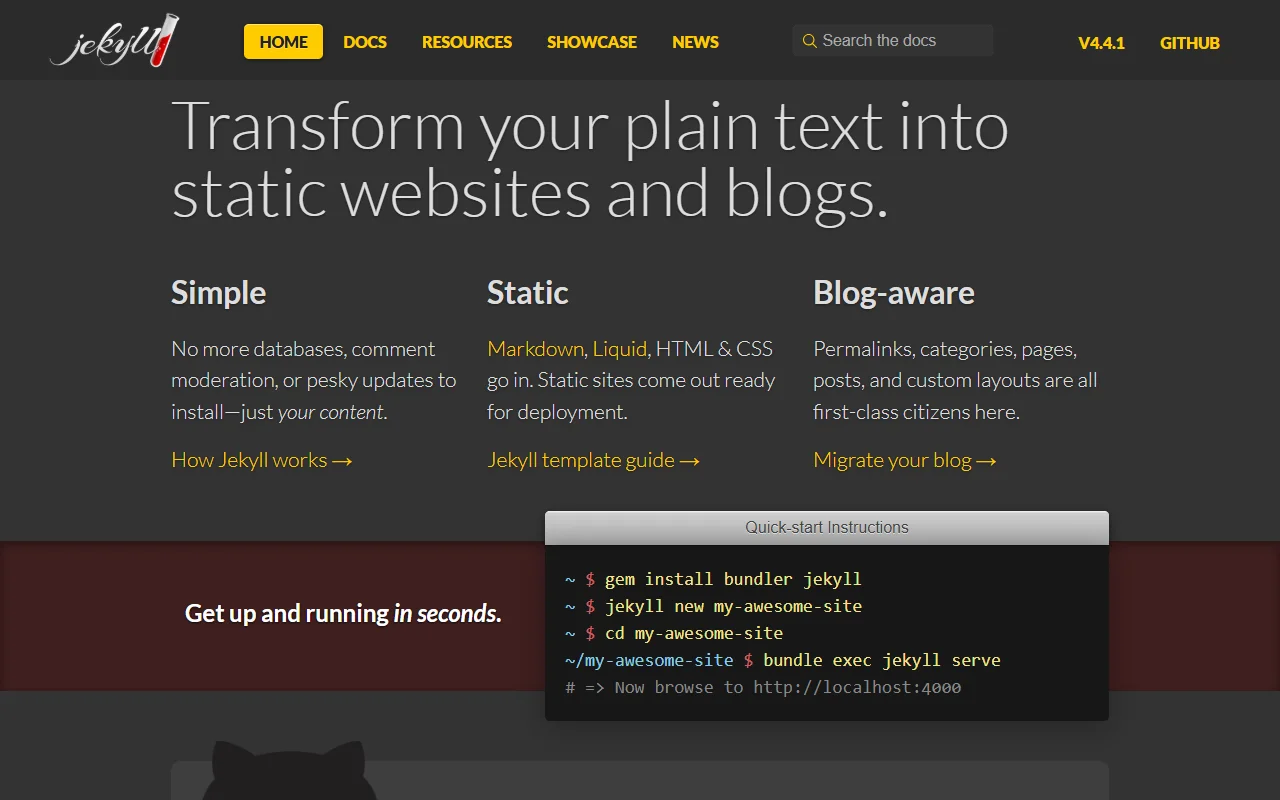
Jekyll is a static site generator written in Ruby. It turns plain text files with Markdown, Liquid templates and HTML into a finished website that you can host anywhere.
What it does
You write content as text files and Jekyll builds the pages, posts and layouts into a folder of static files. It includes blog features such as posts, categories and permalinks, so you do not need a database or a comment system. A local server lets you preview the site while you write.
Key features
- Markdown, Liquid and HTML as source files
- Posts, categories, pages and custom layouts
- Local preview server from the command line
- Works with GitHub Pages for free hosting
Who it's for
Bloggers, documentation writers and project owners who want a simple website without running a server. It is especially common with GitHub Pages, where the hosting service is built around Jekyll sites.
Pricing and good to know
Jekyll is open source under the MIT licence and free to use. You need Ruby and Bundler installed on your computer to build a site. Sites are static, so features like user accounts or live search need extra services or JavaScript.
Highlights
- Builds Markdown and Liquid into static pages
- Posts, categories and permalinks built in
- Local preview server with one command
- Deploys to GitHub Pages without cost