About Angular
Angular is a complete framework from Google for building web apps with TypeScript. It includes components, routing, forms, dependency injection and a template syntax, so teams work from one set of tools.
What it does
You build the interface from components and bind data to templates. Signals track state and update only the parts of the page that depend on a value that has changed. Templates use a built-in control flow syntax for loops and conditions, and deferrable views let you load parts of a page later.
Key features
- Signals for fine-grained state updates
- Control flow in templates such as loops and conditions
- Built-in modules for forms and routing
- Deferrable views and hydration for faster pages
Who it's for
Larger teams that want a shared structure, strong typing and first-party tools rather than choosing many libraries. It suits enterprise dashboards, internal systems and public web apps that must stay maintainable as the team grows.
Pricing and good to know
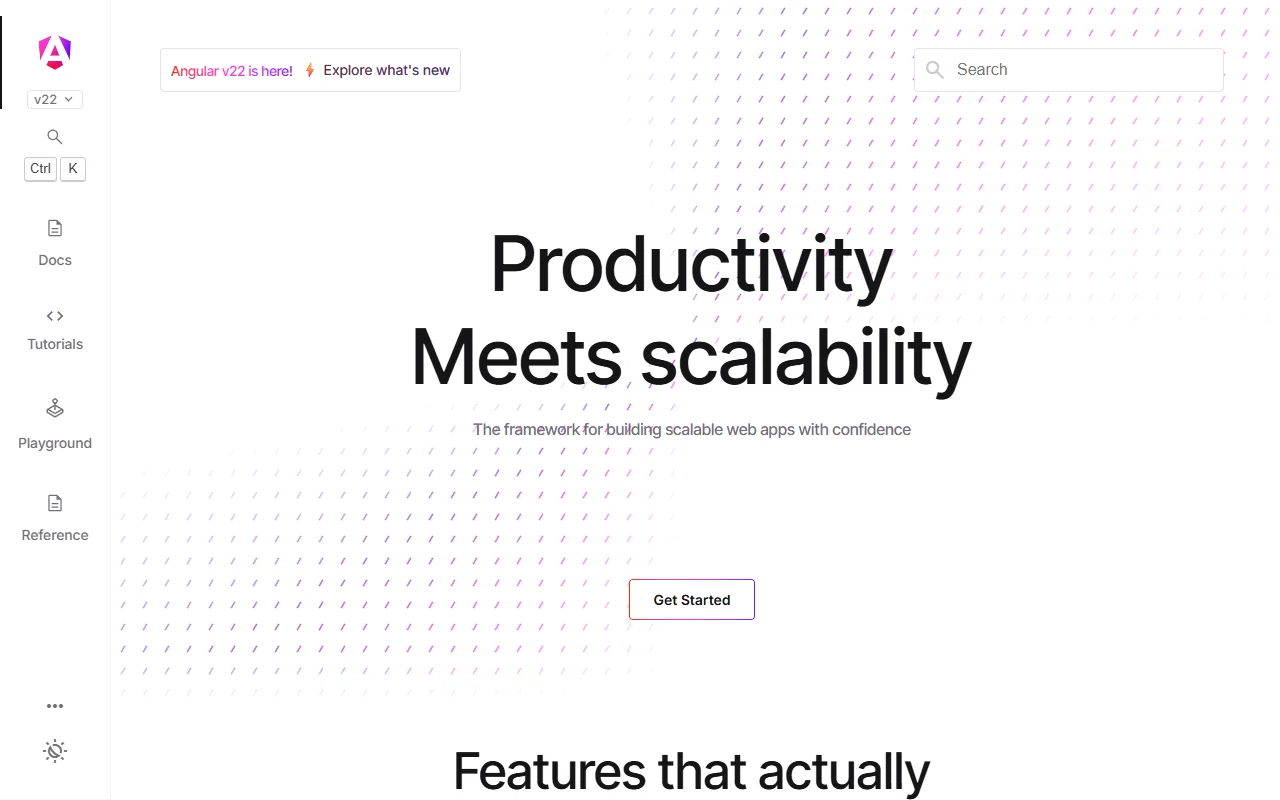
Angular is open source under the MIT licence and free to use. The official site also publishes a tutorial that runs in the browser and a set of tools for working with AI coding assistants on Angular code.
Highlights
- Signals for state that updates only what changed
- Control flow syntax in templates
- Forms, routing and dependency injection built in
- Deferrable views that load parts of a page later